
Unlocking the Future of Education Technology: A Deep Dive
Discover how groundbreaking innovations are reshaping classrooms, empowering students, and revolutionizing the learning journey.
Explore the FutureKey Takeaways
- ✓ AI-powered personalized learning paths are becoming standard, adapting to individual student needs and paces.
- ✓ Virtual Reality (VR) and Augmented Reality (AR) are creating immersive, experiential learning environments.
- ✓ Blockchain technology is enhancing credential verification and secure record-keeping in education.
- ✓ Data analytics provides unprecedented insights into student performance and pedagogical effectiveness.
How It Works
Educators leverage AI tools to evaluate student strengths, weaknesses, and preferred learning styles. This initial assessment forms the basis for tailored educational experiences.
Personalized learning platforms adjust content difficulty and presentation based on real-time student interaction. This ensures optimal engagement and understanding for every learner.
VR/AR technologies transport students to virtual labs, historical sites, or even abstract concepts. This hands-on, experiential learning deepens comprehension and retention.
Big data analytics provide educators with actionable insights into teaching strategies and student progress. This continuous feedback loop allows for dynamic curriculum adjustments and improved outcomes.
The Dawn of Personalized Learning: Tailoring Education to Every Student
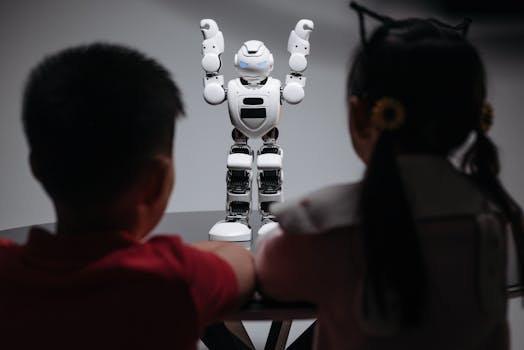 Photo: Pavel Danilyuk / Pexels
Immersive Realities: VR, AR, and the Experiential Classroom
Blockchain, Data Analytics, and the Future of Educational Ecosystems
Navigating the EdTech Landscape: Tips for Educators and Institutions
Comparison
| Feature | Traditional Classroom | AI-Powered Personalized Learning | VR/AR Immersive Learning | Blockchain Credentialing |
|---|---|---|---|---|
| Learning Pace | Fixed pace for all | Adaptive to individual | Self-paced exploration | N/A |
| Content Delivery | Static, textbook-based | Dynamic, tailored content | Experiential, interactive | N/A |
| Engagement Level | Varies, can be passive | High, responsive | Very high, immersive | N/A |
| Feedback | Delayed, generalized | Instant, specific | Immediate, contextual | N/A |
| Credential Security | Paper-based, prone to fraud | N/A | N/A | ✓ |
| Accessibility | Limited by physical location | Enhanced, remote access | Enhanced, virtual access | ✓ |
| Cost (Initial) | Low | Moderate to High | High | Moderate |
What Readers Say
"The personalized learning platforms have transformed how I teach calculus. Students who once struggled are now grasping complex concepts faster, and I can dedicate more time to advanced topics. It's truly revolutionary for differentiating instruction."
Dr. Elena Petrova · Boston, MA"Our school implemented VR for science classes, and the student engagement is through the roof. Seeing the solar system up close or conducting virtual experiments has made learning incredibly exciting and memorable for them."
James Rodriguez · Austin, TX"As an administrator, the data analytics provided by our new EdTech suite has been invaluable. We've identified key areas for curriculum improvement and seen a 15% increase in standardized test scores within two years. It's evidence-based success."
Sarah Chen · Seattle, WA"While the initial setup for our new smart classroom technology was a bit challenging, the long-term benefits are clear. The interactive whiteboards and collaborative tools have fostered a much more dynamic learning environment, though we still need better teacher training on advanced features."
Mark Davis · Denver, CO"Working in adult education, we've found that micro-credentialing powered by blockchain has significantly streamlined our certification process. Our learners appreciate the secure, verifiable credentials they can take anywhere, boosting their career prospects instantly."
Aisha Khan · Miami, FLFrequently Asked Questions
What is the most significant trend shaping the future of education technology?
The most significant trend is the convergence of Artificial Intelligence (AI) with personalized learning. This allows educational content and methodologies to adapt dynamically to each student's individual needs, pace, and learning style, moving away from a uniform approach to highly customized educational experiences.
Is EdTech going to replace human teachers?
No, EdTech is not expected to replace human teachers. Instead, it serves as a powerful set of tools that empower educators. Technology can automate administrative tasks, provide data insights, and deliver personalized content, freeing teachers to focus on mentorship, critical thinking, social-emotional development, and complex problem-solving.
How can schools effectively implement new education technology?
Effective implementation requires a strategic approach: start by defining pedagogical goals, invest heavily in teacher training and professional development, ensure robust IT infrastructure, prioritize accessibility for all students, and foster a culture of continuous evaluation and feedback. It's about integration, not just acquisition.
Is the future of education technology affordable for all schools?
While some advanced technologies can have high initial costs, the trend is towards increasing accessibility. Open-source solutions, cloud-based platforms, and government initiatives are working to make EdTech more affordable. Furthermore, the long-term benefits in student outcomes and operational efficiency can often outweigh the initial investment, making it a cost-effective solution in the long run.
How do VR and AR differ in their application in education?
Virtual Reality (VR) creates fully immersive, simulated environments, transporting users to entirely digital worlds for experiential learning (e.g., virtual field trips, surgical simulations). Augmented Reality (AR) overlays digital information onto the real world, enhancing existing environments with interactive content (e.g., viewing 3D models on a textbook page, interactive museum exhibits). Both aim to make learning more engaging and experiential.
Who should be most concerned with the future of education technology?
Everyone involved in the educational ecosystem should be concerned: educators need to adapt their teaching methods, students will experience new learning paradigms, parents need to understand these changes, and policymakers must ensure equitable access and appropriate regulations. Educational institutions and technology developers also play crucial roles in shaping this future responsibly.
What are the ethical considerations surrounding AI and data in EdTech?
Key ethical considerations include data privacy and security, algorithmic bias (ensuring AI doesn't perpetuate or amplify existing inequalities), transparency in how AI makes decisions, and the potential for over-reliance on technology at the expense of human interaction. Robust policies and careful design are crucial to mitigate these risks.
What emerging technologies, beyond AI and VR, are likely to impact education?
Beyond AI and VR, blockchain technology is emerging for secure credentialing and record-keeping. The Internet of Things (IoT) could create smart learning environments. Haptic technology could enhance tactile learning. Brain-computer interfaces, while further off, hold potential for new forms of interaction and learning assessment. The integration of these technologies will continue to redefine the learning experience.
The future of education technology is not just about new tools; it's about a fundamental shift in how we learn, teach, and grow. Embrace this exciting evolution to unlock unprecedented potential for students and educators alike. Start exploring the possibilities today and shape a brighter educational tomorrow.